
Is the magnetic polishing machine a CNC polishing machine?
The relationship between the magnetic polishing machine and the CNC polishing machine needs to be comprehensively analyzed from the dimensions of equipment principle, control method and application scenario. The following is a system analysis:
Comparison of technical principles
Magnetic polishing machine
Core principle: Use alternating magnetic field to drive stainless steel needle abrasive to form eddy current motion, and achieve surface treatment through high-frequency collision
Process characteristics: No fixed motion trajectory, suitable for complex geometric surface treatment
Control factors: magnetic field strength, frequency, medium ratio, processing time
CNC polishing machine
Infrastructure: CNC system + mechanical actuator
Control dimension: path planning (G code), pressure control, speed regulation
Processing characteristics: programmed trajectory control, suitable for deterministic surface treatment
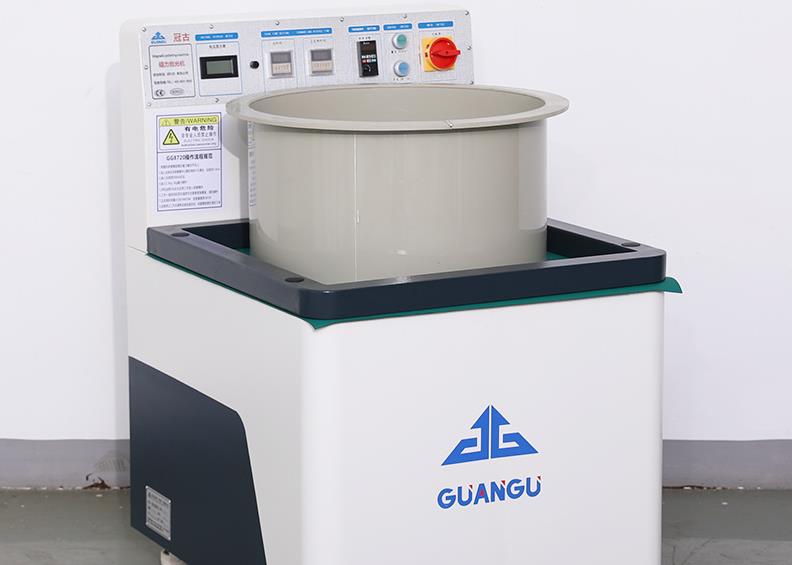
Essential differences in control systems-CNC polishing machine
Traditional magnetic polishing machines use open-loop control systems to achieve extensive control through preset parameters (such as processing time and medium ratio). The CNC system has:
Real-time feedback mechanism (force/position sensor)
Adaptive algorithm (PID control)
Multi-axis linkage capability (XYZ axis coordination)
Process database support
III. Technology integration development trend
High-end magnetic polishing equipment has undergone CNC transformation:
Siemens Sinumerik system integration case: Control magnetic field generator parameters through PLC
Compound equipment: magnetic polishing module + six-axis robot arm (KUKA)
Intelligent monitoring system: industrial camera + AI algorithm to evaluate polishing quality in real time
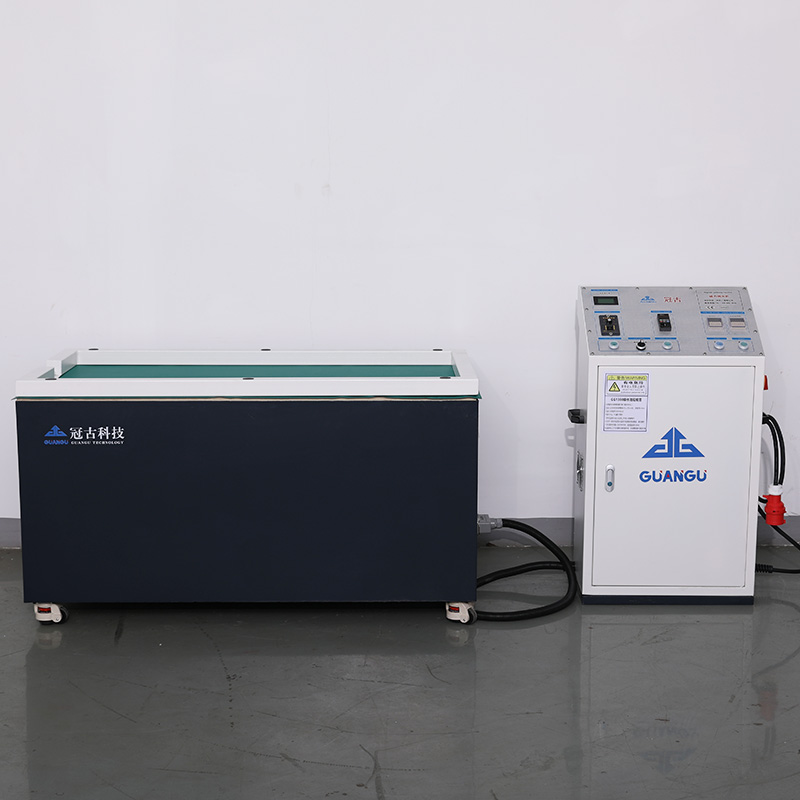
IV. Industry application positioning
Traditional magnetic polishing: batch production of micro-small workpieces such as watch parts and jewelry Mass processing
CNC magnetic composite machine: precision parts such as aerospace blades and medical implants
Full CNC system: high value-added products such as automotive molds and optical lenses
V. Technical and economic analysis
CNC transformation increases the investment cost of magnetic polishing equipment by 40-60%, but brings:
Improved process stability (CPK value>1.67)
Consumables saving rate 15-30%
Product yield increased from 85% to 98%
Changeover time shortened by 70% (through process parameter storage)
Conclusion-CNC polishing machine
Basic magnetic polishing machines do not belong to the category of CNC equipment, but modern intelligent magnetic polishing systems have achieved technical integration through integrated CNC units. Equipment classification needs to be determined based on the specific control system configuration. The industry development trend shows that CNC transformation is reshaping the traditional surface treatment process system. It is recommended to focus on the closed-loop control capability of the equipment and the degree of digitalization of process parameters when purchasing.


You must be logged in to post a comment.